Woven
Echoes
sensing . sound . translation . gathering . running .
sensing . sound . translation . gathering . running .
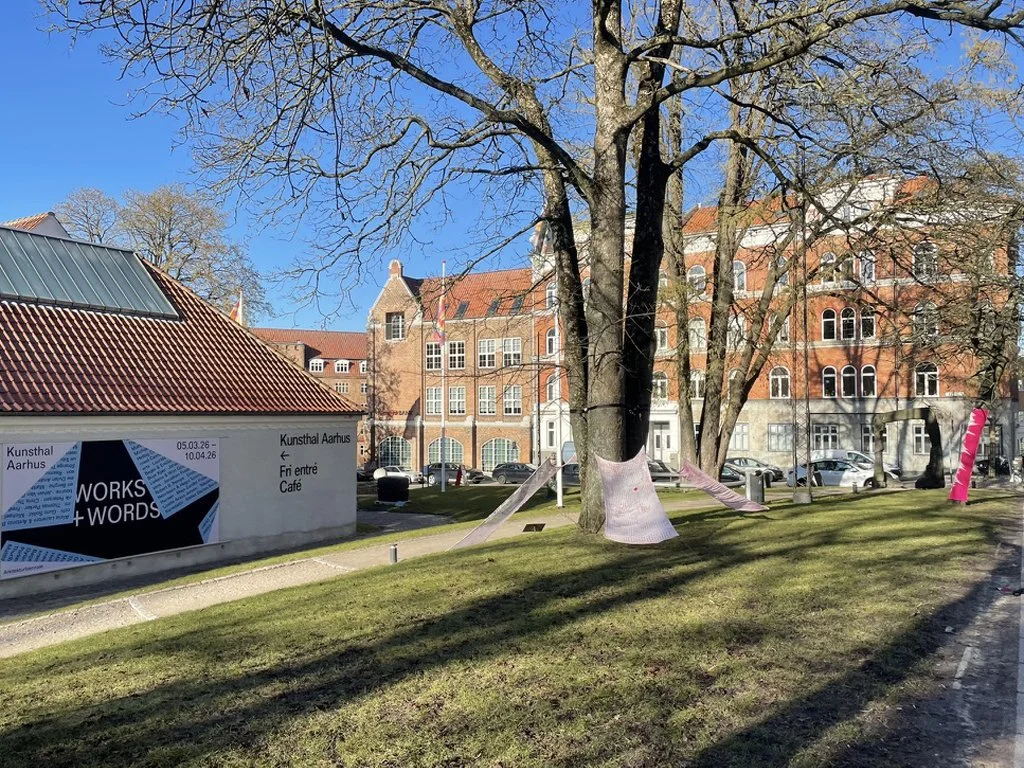
Woven Echoes is a site-responsive project that explores how architecture and textile practices can operate as forms of listening. Developed for Kunsthal Aarhus, the work engages with the cherry trees of the Sculpture Park through environmental sensing, material storytelling, and situated making. Bringing together traditional textile techniques, ecological data, myth, and embodied engagement, the project asks how design might move beyond extraction and control toward attentiveness, care, and relation.
Rather than treating landscapes as passive environments to be measured, Woven Echoes approaches them as active participants in meaning making. Environmental conditions, rhythms, and stories are translated into knitted textiles, bio-materials, and spatial installations that register ecological change over time. Across the project, textiles become temporal archives holding together environmental memory, present atmospheric conditions, and lived encounters with place.
2026 _ mobile sensing device
Exhibited : Works+Words Biennale in Artistic Research in Architecture, Aarhus, 2026.
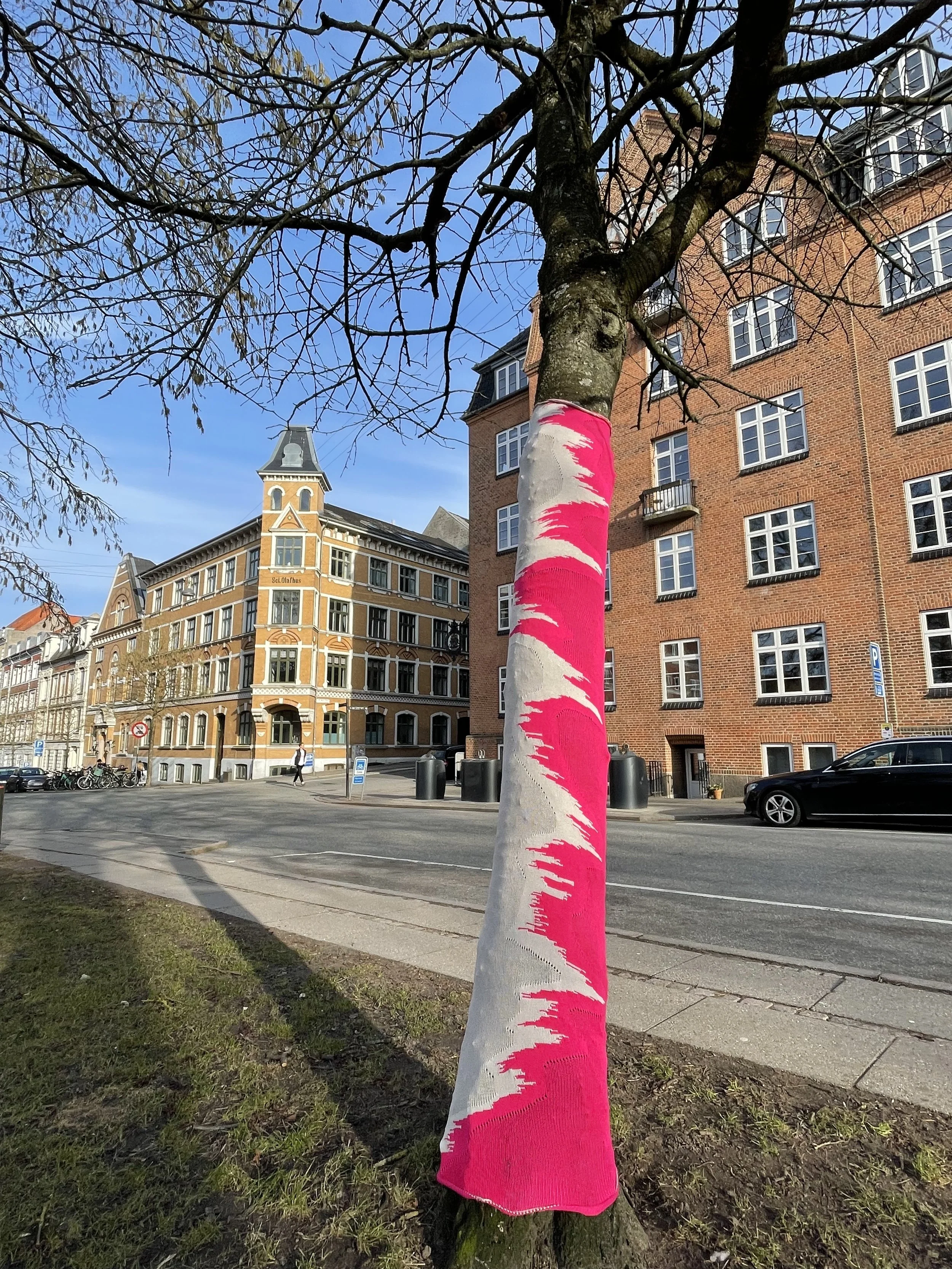
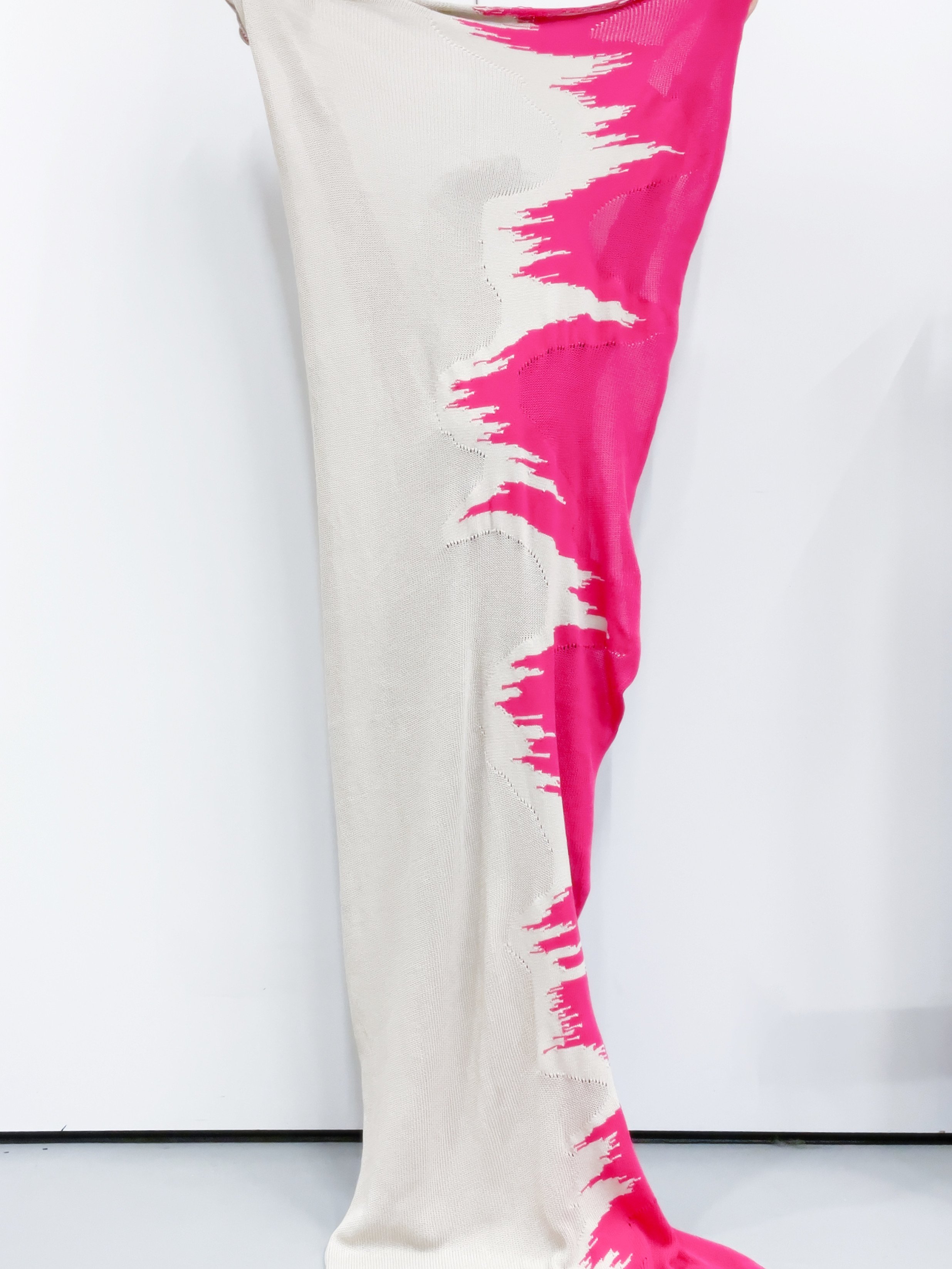
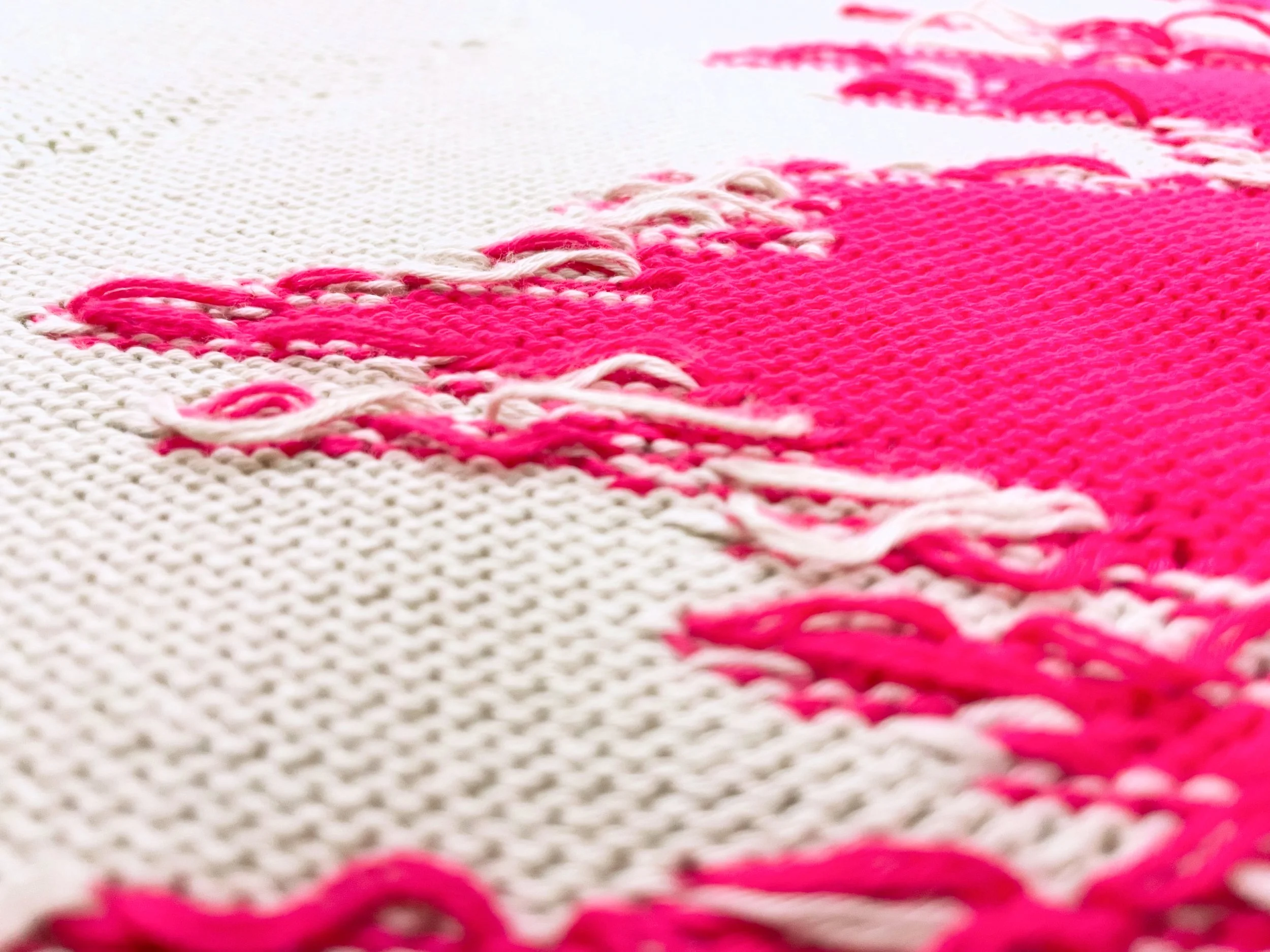
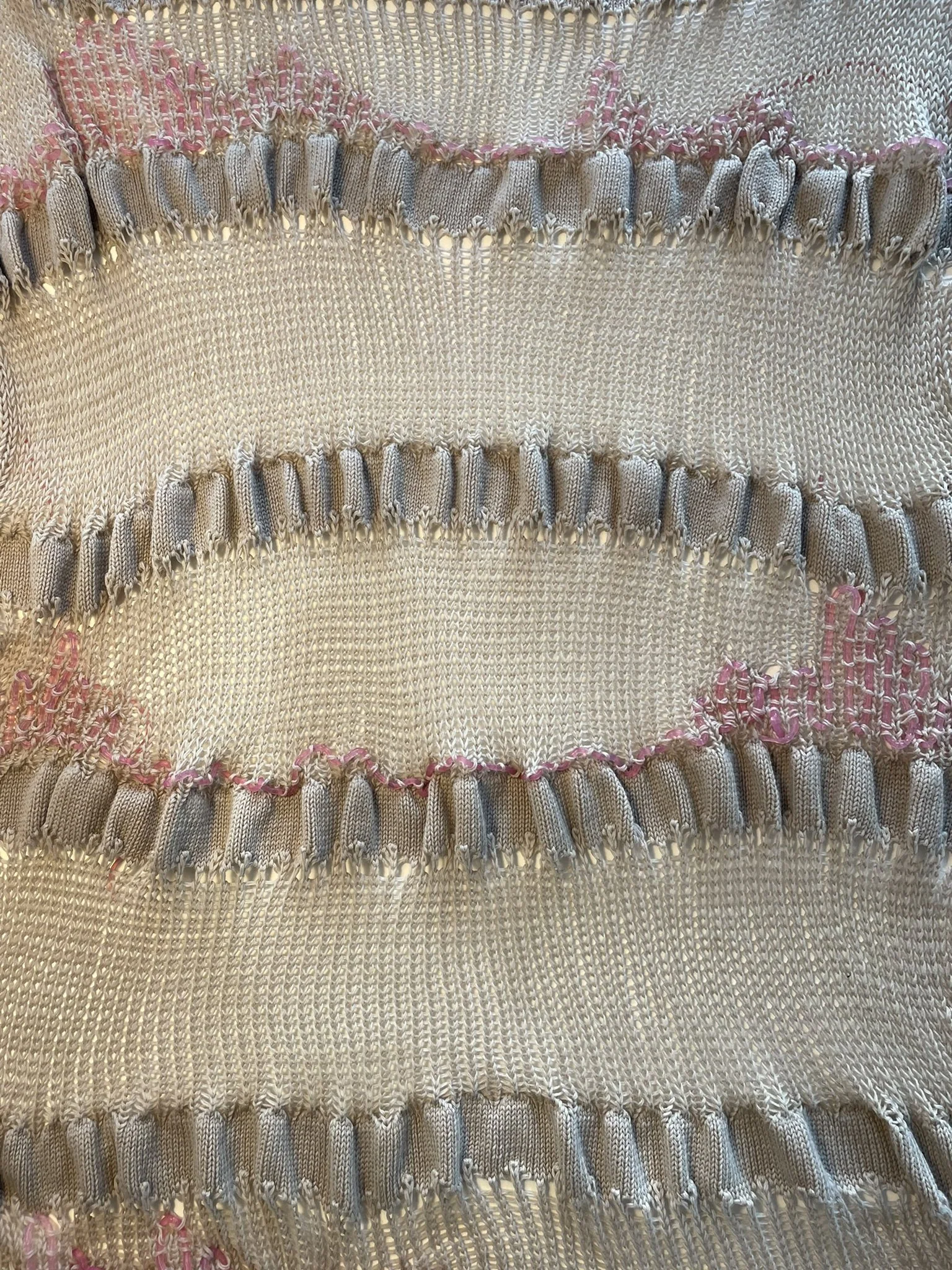
The knitted base textile encodes 837 years of climate history, translating annual records of peak cherry blossom in Kyoto into a tactile archive. Each knitted row corresponds to one year, while the horizontal shifts in pattern trace the gradual movement of flowering earlier in the calendar over time a visible register of climate change unfolding across centuries. Wrapped around the trees, the textile situates planetary scale environmental change within the landscape itself.
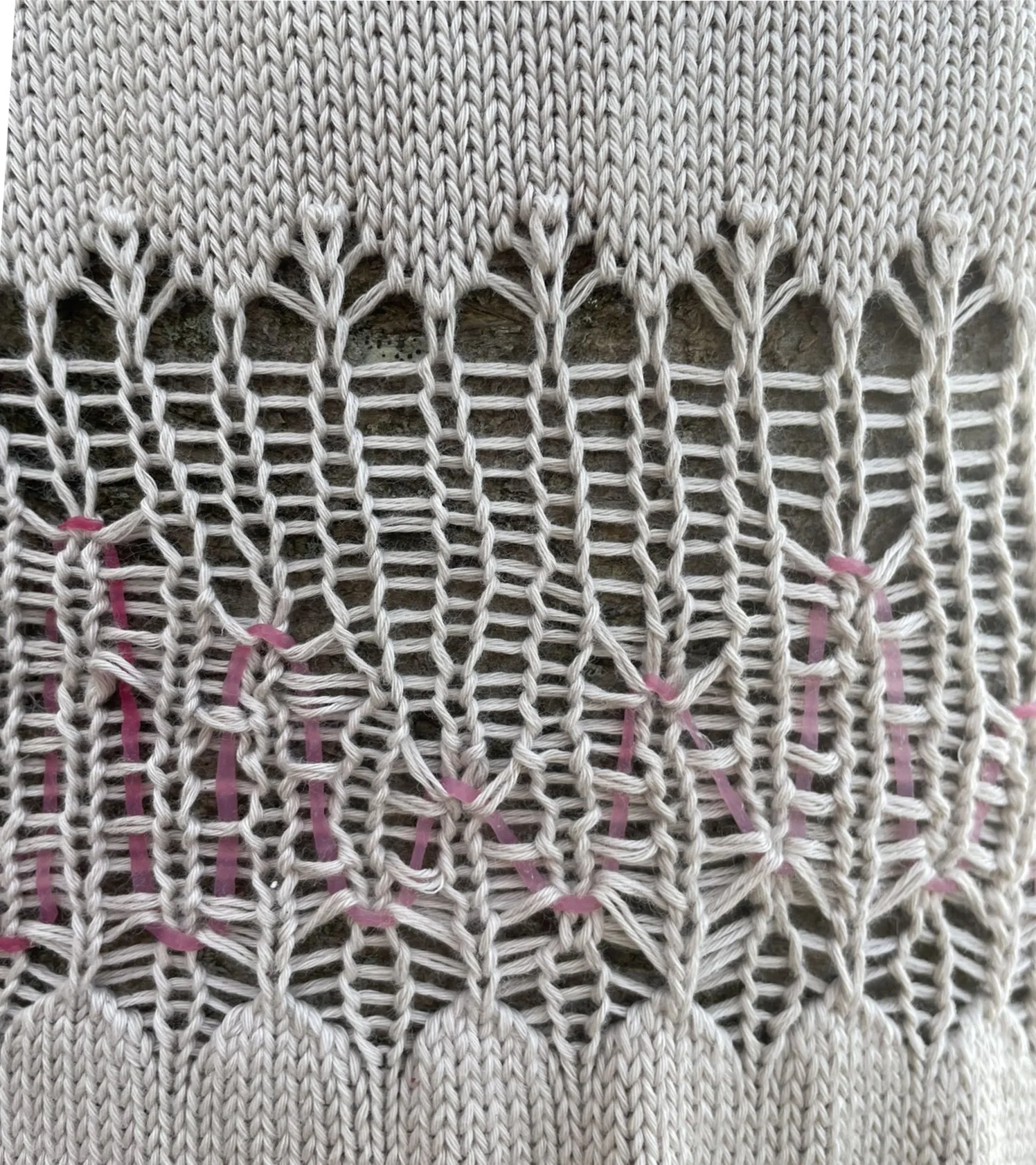
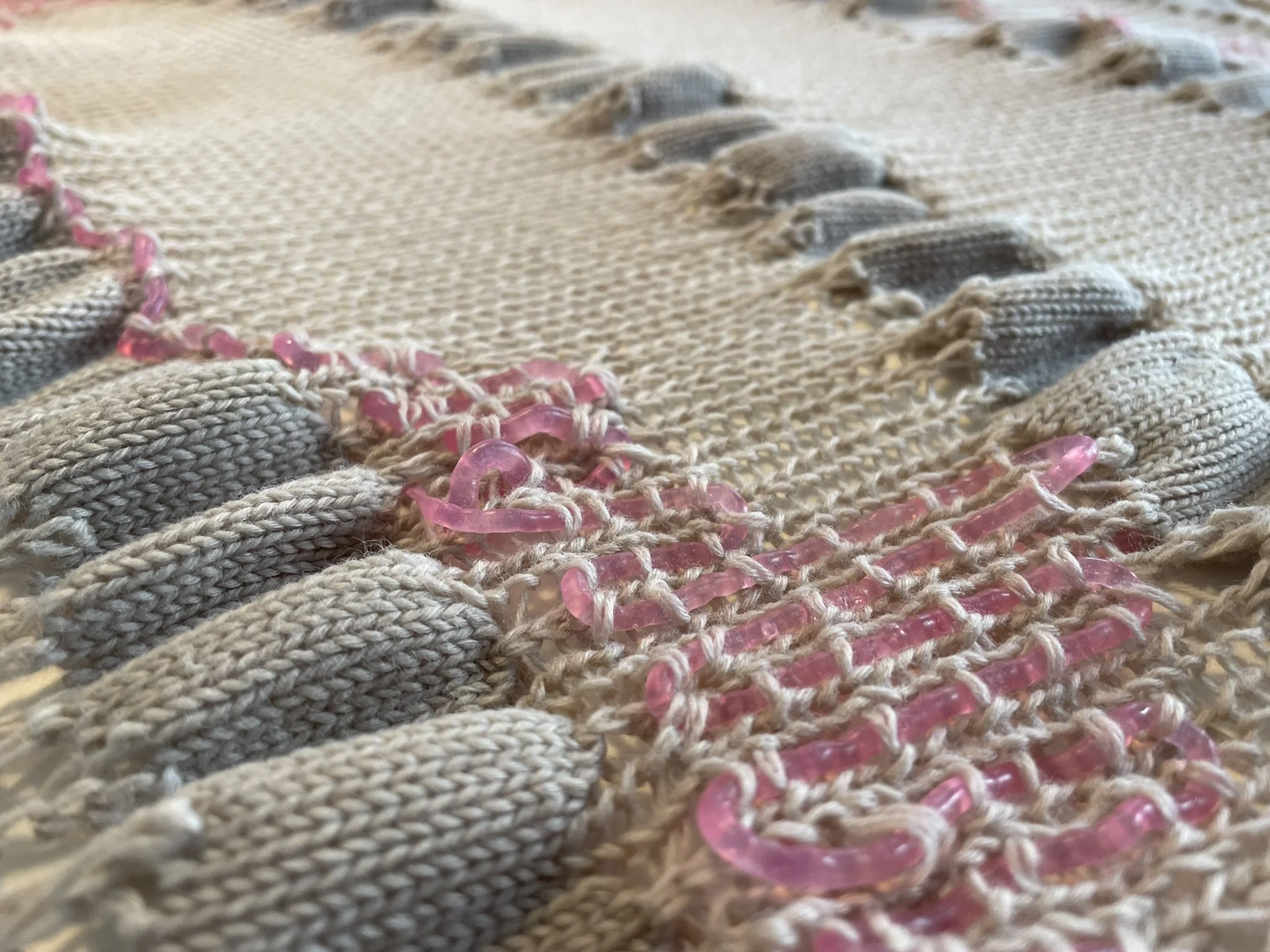
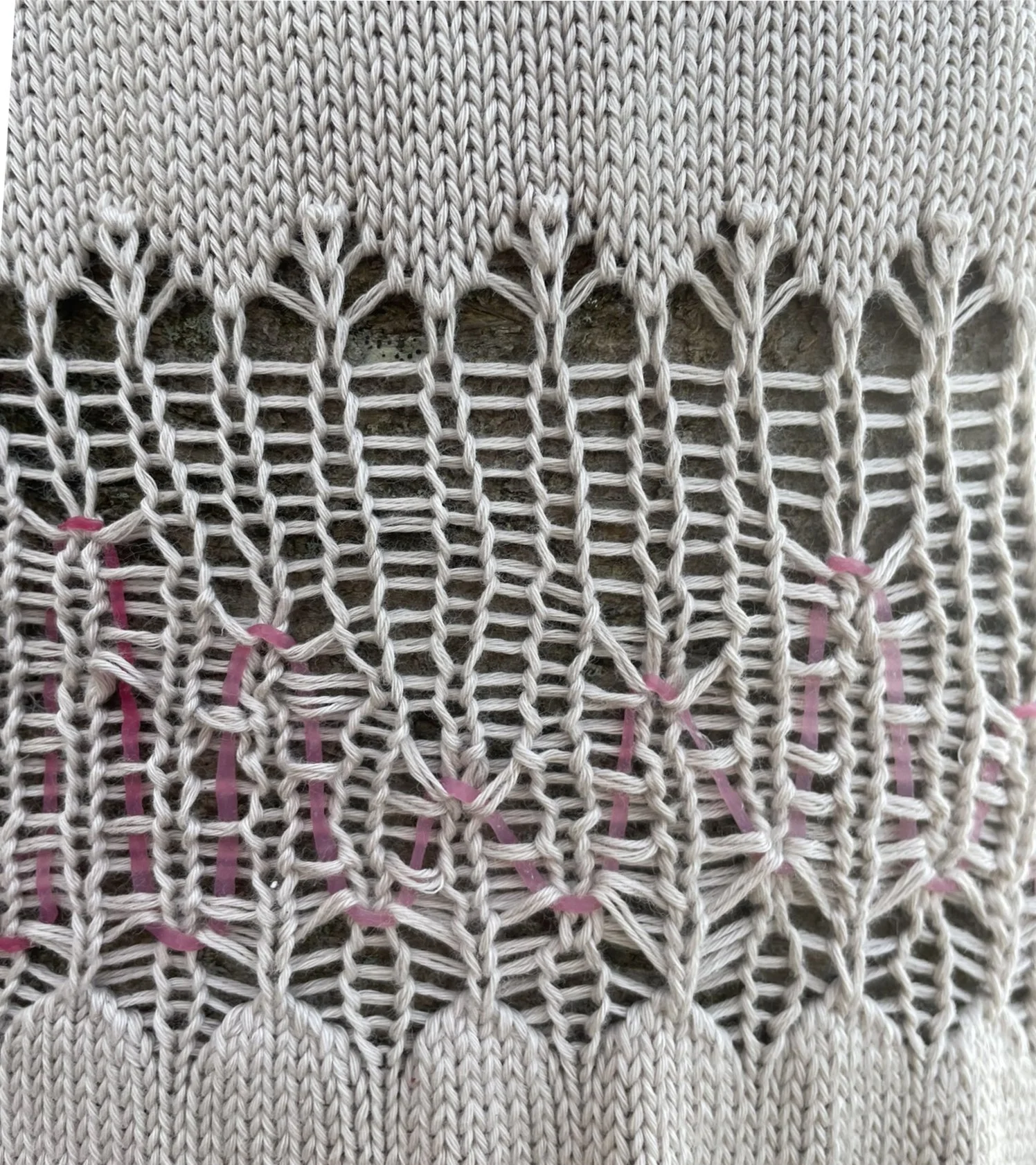
Present rhythms of the site are gathered through vibration sensing and embodied engagement. Vibrations from the trees, alongside situated observations and encounters, are translated into an interweaving logic that guides how the bio-yarns are threaded into the knitted scaffold. Rhythm becomes a method of recording presence: a way of translating movement, encounter, and environmental relation into material form.
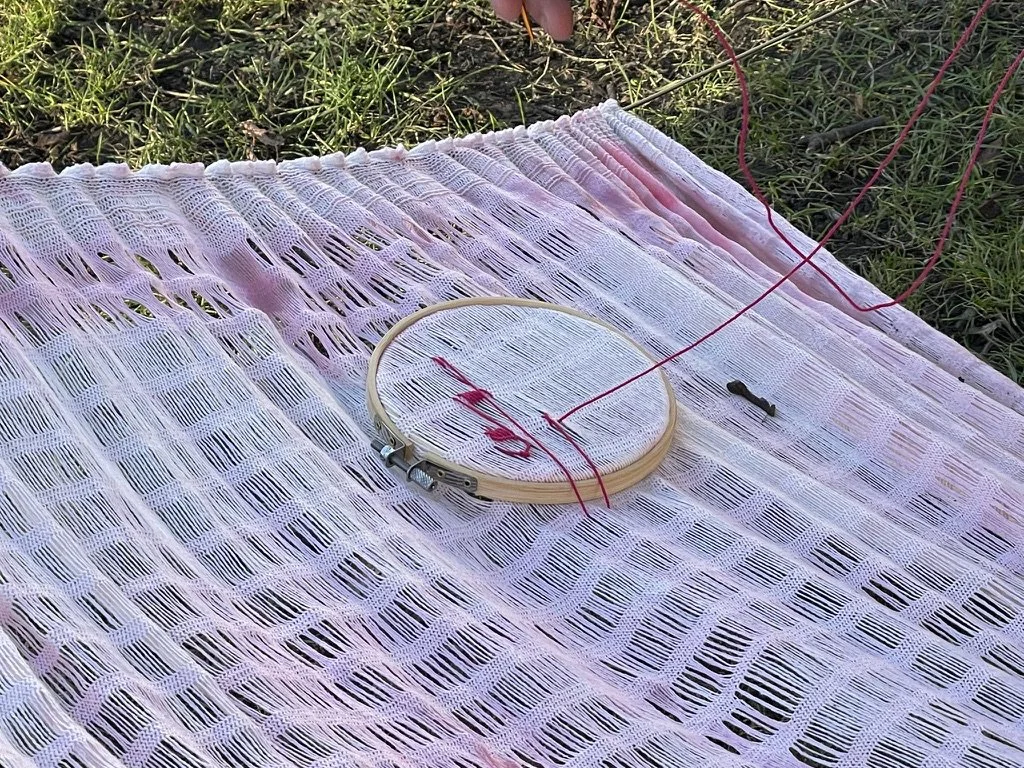
An open textile canvas is infused and solidified in situ with biomaterials, allowing the site’s conditions to become directly embedded in the textile structure.